Often, admissions are the first ever interaction parents have with a school, making every enquiry a chance to develop a positive impression. While most training institutes, schools, and colleges depend on admission modules present in their ERP, they often recognise that it provides limited support for nurturing potential parents, tracking follow-ups, and handling enquiries throughout the admissions journey. Here’s where the comparison between admissions CRM vs. ERP admission module becomes essential.
A dedicated admissions CRM is made to improve conversion rates, automate communication, and streamline lead management. This article will highlight the chief differences between the two and explain why most educational institutions seeking stronger admissions management opt for a Fedena admissions alternative.
What is an ERP Admission Module?
A school ERP is created to handle everyday school operations. Typically, this includes modules for admissions, transport, timetable management, payroll, fees, examinations, and attendance.
The admissions module chiefly emphasises gathering application information after parents have begun the admission process. Usually, it allows the school to:
Generate admission reports
Record student details
Upload documents
Track application status
Collect application forms
These features are beneficial for administrative work, yet are often restricted in handling enquiries prior to the submission of an application.
An ideal example of this is Fedena. It is a reputed school ERP. Its admission module works perfectly for basic record keeping. This, however, was not designed as a lead management tool. Here’s exactly why a good number of educational institutes seek an effective Fedena admissions alternative once they scale up, that can manage the enquiry management and follow-up side of admissions in a better way.
Understanding an Admissions CRM
A CRM system made for schools emphasises handling potential parents from the first enquiry up to the completion of the enrolment.
Rather than just storing application data, the admissions CRM enables schools to develop relationships with parents/guardians by ensuring personalised follow-ups and timely communication.
A dedicated admissions CRM is capable of the following:
Capture enquiries from different channels
Analyse conversion rates
Assign leads to counselors automatically
Measure enquiry sources
Schedule follow-ups and reminders
Send automated messages and emails
Track every conversation
Enhance the complete admissions experience
Instead of just handling applications, this actively enables a school to increase admissions.
Admissions CRM vs. ERP Admission Module: A Quick Comparison
Admissions CRM vs. ERP admission module: the difference between these two is striking. CRM is made for conversion. ERP is weak in engagement but strong in administration.
Purpose: Admissions CRM enables the conversion of enquiries into admissions right away. An ERP admission module records data only after students join.
Lead Management: A CRM keeps all enquiries, including those that do not convert, so educational institutions can analyse drop-offs or follow up. An ERP system does not really track leads.
Communication Tools: CRMs have built-in calling, email, SMS, and WhatsApp. An ERP module rarely does, thus making staff juggle several applications.
Follow-Up Automation: A CRM automatically sends reminders to parents and counselors. An ERP module depends on staff memory, which becomes unreliable with multiple enquiries.
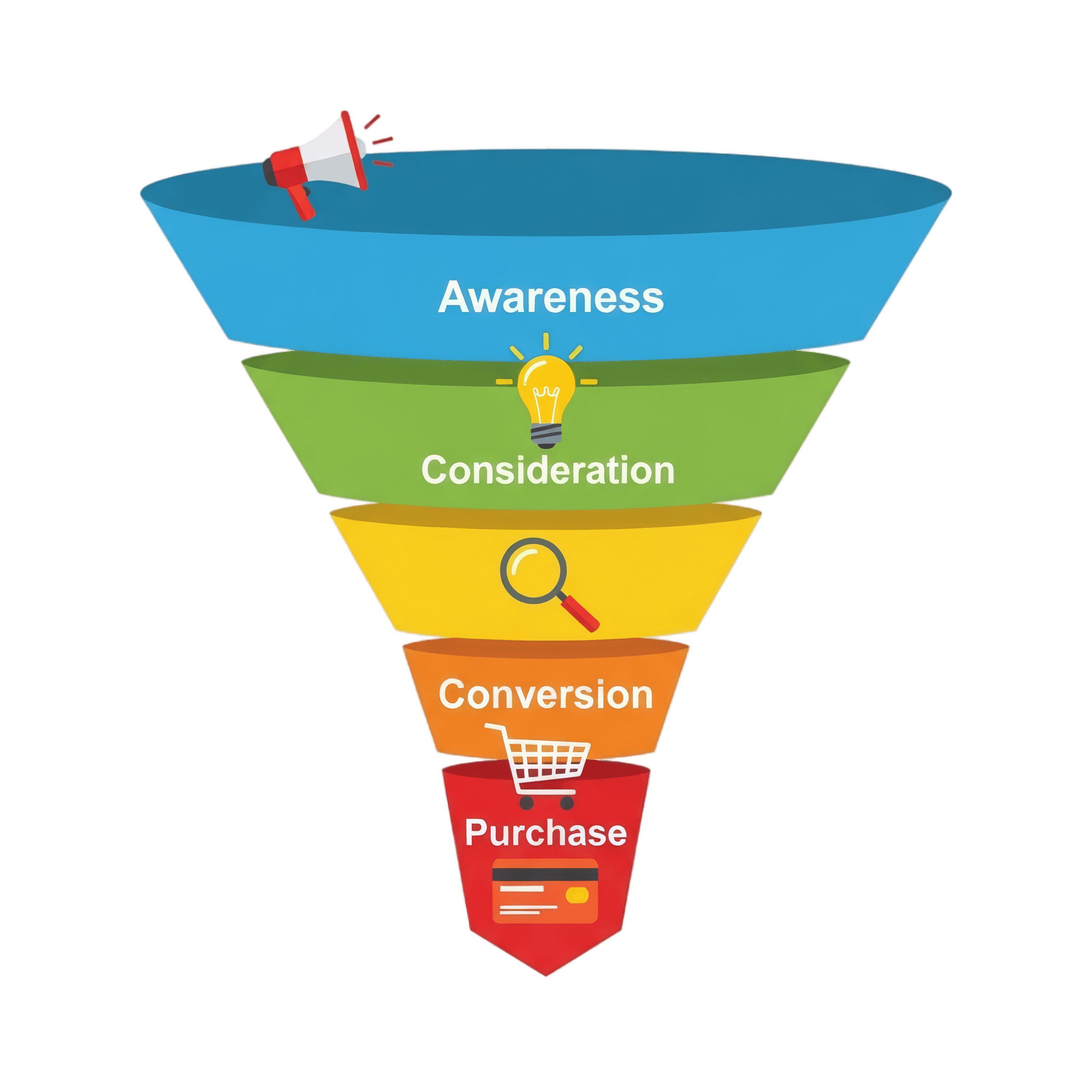
Reporting and Analytics: A CRM reflects a clear funnel- drop-offs, admissions, applications, and enquiries. An ERP system shows only enroled students.
Multi-Channel Source Tracking: A CRM tracks where leads actually come from- social media, fairs, referrals, and ads. An ERP module typically does not capture this data.
Scalability: A CRM is made to support enrolment growth and manage high enquiry volumes, while an ERP admission module is ideal for basic admissions management.
Why Does This Comparison Matters?
If your school only gets a few admissions annually, an ERP admission module is likely to be enough. Yet if you have a team of counselors, run marketing campaigns, or receive innumerable enquiries every season, an ERP module might not keep up.
Educational institutes, in the absence of a CRM, often lose leads as no one follows up on time. Calls go unlogged, the marketing team is clueless about which campaigns are actually working, and multiple enquiries sit in spreadsheets. This is the gap that pushes schools to go beyond their existing ERP.
Here’s why the search for an effective Fedena admission alternative has indeed grown so common. Though Fedena works appropriately as a school management ERP yet was not made to be an enquiry and sales management tool. Schools that desire to grow their admissions in a data-driven, structured way generally end up selecting a dedicated CRM alongside, or rather than, their ERP.
Where Ether Fits In
Here’s where purpose-built admissions CRMs, especially Ether, fit in. Built by educators, this platform has been made for education admissions and focuses on the factors that genuinely drive enrolment- clear funnel reports, counselor tracking, automated follow-ups, and enquiry capture- instead of trying to also handle payroll or attendance.
Schools exploring choices beyond the admission module of Fedena often go for a focused system, such as Ether, as it solves the exact issues an ERP was not designed to solve. Ether is built with special features such as AI Call Audits (coming soon) and seamlessly integrates with ERP systems, thus ensuring every enroled student flows into ERP records but without duplication.
Choosing the Correct Solution
A good number of educational institutions already successfully use ERP software for administrative and academic operations. Depending solely on the admissions module, however, may restrict growth. Every school should assess if they require stronger parent engagement, higher admission conversions, advanced reporting, lead nurturing, faster follow-ups, automated communication, and better enquiry tracking.
If all there are priorities, then a dedicated admission CRM provides clear benefits over any basic ERP admission module. A school that combines CRM and ERP receives the best of both worlds: an ERP to handle students’ journey after they are enrolled and a CRM to handle the admissions funnel.
Takeaway
The comparison between an ERP admissions module and a real admissions CRM concludes to a simple idea: an ERP system records what happened already, while a CRM make more of this happen.
The debate concerning admissions CRM vs. ERP admission module does not imply selecting one over another. Both the systems serve different needs and can effectively work together. The CRM system emphasises attracting, nurturing, and converting potential parents into enroled students while an ERP handles the operational part of school administration.
For educational institutions exploring an effective Fedena admissions alternative, opting for purpose-built admissions CRM will help make a more efficient, parent-friendly, and organised admissions process and at the same time supporting long-term enrolment growth. By combining CRM and ERP, a school can automatically streamline admissions, augment parent experience, and develop a strong foundation for future success.
Explore More Articles:

Related articles
Oct 17, 2026
K-12 Digital Transformation in 2026: Trends and Best Practices

Oct 10, 2026
What Are the Stages of a School Admission Funnel? A Complete Guide
Oct 10, 2026
CRM Full Form in Business: Meaning, How It Works & Top Tools