Handling student admissions today has become more challenging than it was earlier. Now schools receive enquiries from multiple sources, such as walk-ins, emails, phone calls, education portals, social media, and websites. Besides, parents expect personalised communication, quick responses, and a streamlined admissions experience.
Most educational institutions think their existing school ERP admissions module is enough to handle this process. Though an ERP is ideal for managing administrative tasks after student enrolment, often its admission module is restricted with regard to attracting, nurturing, and converting potential parents.
Here, recognising the difference between a true admissions CRM vs. an ERP module becomes significant. A dedicated admissions CRM has been designed to assist schools in effectively handling enquiries, increasing enrolments, and improving communication.
Let’s uncover why a school’s ERP’s admission module may be holding its admissions team back.
Why Are Admissions Actually Different?
An ERP system is made to handle people who are part of the school already- payroll staff, enrolled students, structured data, and classes. However, admissions start with strangers. Parents fill the form, connect with the front desk, or see ad messages on WhatsApp. These are not yet in the system- they are indeed leads who may select your school or 5 others.
The school ERP admissions module was made to record a student once enroled, and not enable one to win that decision. No wonder it often falls short in the current competitive environments where families expect schools to serve as modern service providers.
Common Problems Related to ERP Admissions Modules
Rigid Forms: Often, a generic enquiry form frustrates active parents
Leads Lost: No visibility or reminders, thus, counselors forget about follow-ups
No Marketing ROI: Campaigns are expensive, but ERP hardly tracks which ones convert
No Funnel View: ERP reflects enroled students but not drop-offs, enquiries, or visits
Weak Communication: Staff juggle ERP and personal phones; no integrated email, WhatsApp, or SMS
Messy Data Entry: Diverse sources demand manual input
Such issues compound at peak admission seasons, as there is a surge in enquiry volumes and counselors fail to handle dozens of conversations every day.
What True Admissions CRM Performs Differently?
A CRM tool is designed around a single goal: converting any interested individual into a dedicated customer or in case of a school, a committed parent or guardian.
A dedicated admission CRM, especially Ether, is specifically designed for this job. Built by educators and equipped with impressive features such as AI Call Audits (releasing soon), it treats an enquiry as the beginning of a relationship that demands nurturing and not as a single form entry. This, in practice, appears like:
Measurable staff performance, highlighting how fast every counselor responds to leads
Every lead is automatically captured, from an ad campaign, walk-in register, phone call, or a website form
Automated follow-ups along with reminders so nothing is missed, as well as templates so staff are not retyping messages the entire day
Tracked marketing ROI, reflecting which campaigns genuinely convert into an enroled student, not merely clicks
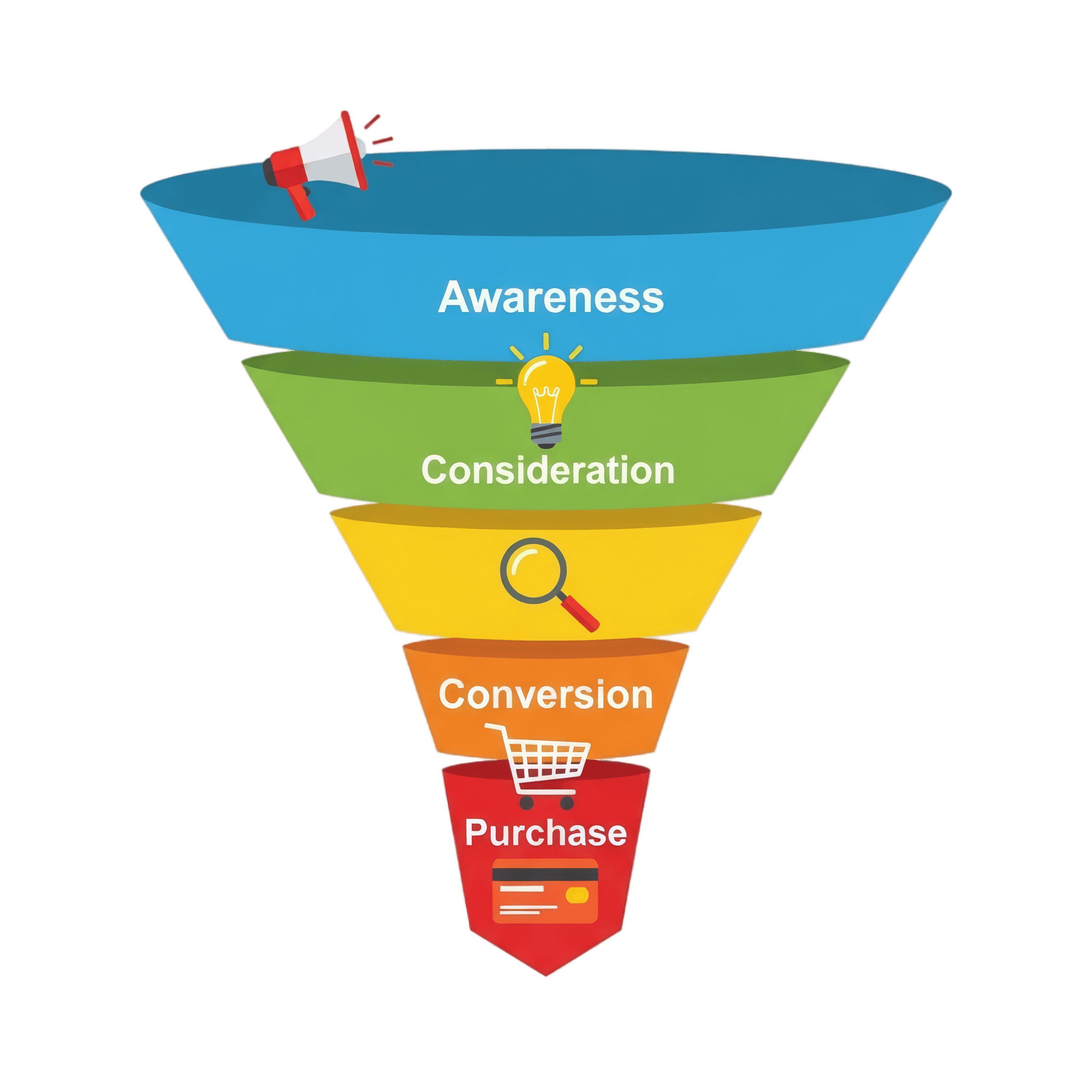
A visible funnel- admission, offer, application, visit, and enquiry- so leadership views where parents drop off
A single screen for communication, merging calls, email, WhatsApp, and SMS
By emphasising conversion, a CRM ensures every parent/guardian feels valued, and no enquiry is lost.
CRM vs ERP Admission Module: Remarkable Differences
Here’s a simple checklist that reflects on the contrast between a dedicated CRM and the School ERP admissions module:
Feature | Admissions CRM | ERP Admissions Module |
|---|---|---|
Lead Capture | Auto-capture from walk-ins, calls, ads, websites | Manual entry only |
Lead Tracking | Tracks every communication, counselor, source, and enquiry | Shows application status |
Follow-up Management | Automated reminders, pending actions, scheduled tasks | Depends on spreadsheets, notes |
Communication | Integrated call logs, email, SMS, WhatsApp | Limited |
Parent Experience | Reminders, personalised communication, faster replies | Delayed responses |
Pipeline Visibility | Full funnel view | Basic reports |
Team Collaboration | Real-time shared updates | Scattered info and duplicate follow-ups |
Marketing Insights | Tracks conversions, campaigns, referrals | No ROI tracking |
This comparison indeed makes it clear: on the one hand, ERP records admissions, and on the other, CRM drives them actively.
Signs Your School ERP’s Admission Module is Holding You Back
Remember, your existing system might not be enough in case of the following:
Teams struggle with increasing enquiry volumes
Staff depend on Excel for enquiries
Reports take a lot of time
Parents/guardians complain about slow responses
Marketing ROI is not clear
There are missed follow-ups
Enquiries from diverse platforms are not centralised
Counselors lack a conversation history
These are indeed clear indications that your school has outgrown the school ERP admissions module.
Why Do Schools Require Both a CRM and an ERP?
This is not about replacing ERP. This remains essential after admission- timetables, report cards, fees, and attendance. Admissions however is a different job demanding a different tool. Today, most schools integrate both an ERP for operations and a CRM for admissions. A good system connects smoothly, so enroled students flow into ERP from CRM without duplicate data entry.
Dedicated Admissions CRM: The Real Benefits
Often, schools using a dedicated CRM observe the following:
Better marketing ROI
Faster response times
Smarter admissions planning
Better parent engagement
Accurate reporting
Higher enquiry-to-admission conversion
Stronger teamwork
Improved counselor productivity
Such gains are valuable, especially at peak admission seasons when there is a spike in enquiry volumes and a counselor must juggle countless conversations simultaneously. The comparison between a true admissions CRM vs. an ERP module reveals that an ERP sustains operations while a CRM empowers admissions teams.
Getting Ready for Future Admissions
With each passing year, admissions are getting more competitive. Parents expect educational institutions to communicate as modern businesses- personalised guidance, regular updates, easy appointment booking, digital forms, and quick replies. They compare schools both on academics and on the quality of the admissions experience. A clunky form or a slow response can be sufficient to lose a parent to a competitor.
Schools that depend solely on the school ERP admissions module might struggle to cater to such expectations. In fact, adding a CRM will enable more organised, streamlined, and parent-friendly admissions, while cutting down manual staff work. Ether, for instance, integrates with ERP, thus ensuring efficiency without any disruption.
Takeaway
Though useful for administration and application records, ERP admissions fall short in handling the complete admissions journey. With an increase in enquiry volumes and parents seeking personalised, faster communication, schools require tools beyond a basic application management.
The comparison is evident: CRM captures enquiries, increases conversions, automates follow-ups, and improves communication, while ERP handles operations and enroled students. By combining both CRM and ERP and using integrated platforms such as Ether, educational institutions can improve parent experience, streamline admissions, and build a more effective enrolment procedure for long-term growth.
Explore More Articles:

Related articles
Oct 17, 2026
K-12 Digital Transformation in 2026: Trends and Best Practices

Oct 10, 2026
What Are the Stages of a School Admission Funnel? A Complete Guide
Oct 10, 2026
CRM Full Form in Business: Meaning, How It Works & Top Tools